
Current Projects

Development in families with Neurodegenerative Disease (FamilyND)
This study at the UCSF Dyslexia Center will identify how early disease-specific neural circuit differences arise in children carrying mutations causing FTD or AD and compare them with children with neurodevelopmental disorders such as autism spectrum disorder, attention-deficit hyperactivity disorder, and language-based learning disabilities.
Funding: National Institutes of Health/National Institute on Aging
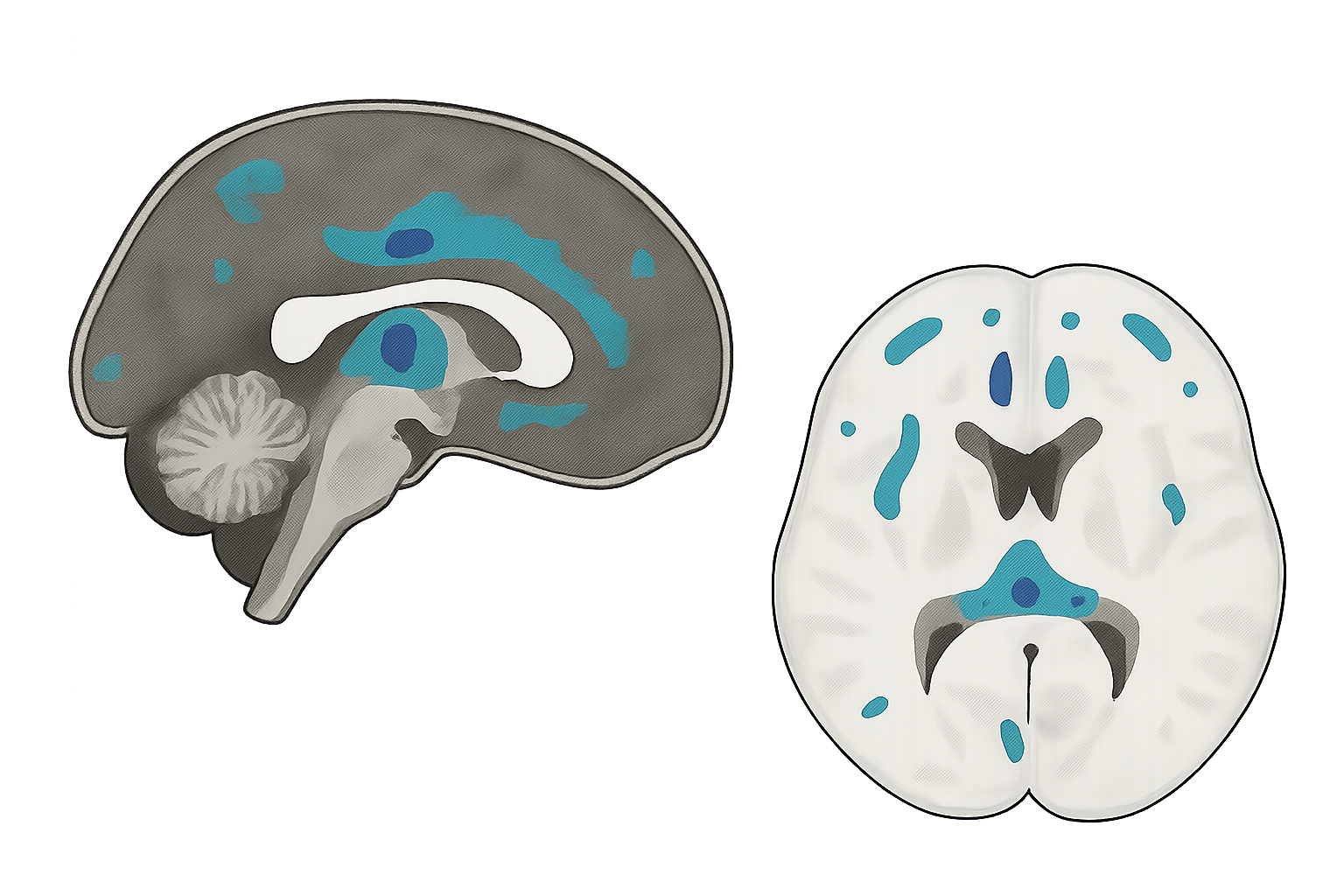
Neuroimaging and biofluid marker studies in adults with asymptomatic and early-stage genetic frontotemporal dementia:
Defining trajectories of dynamic biomarkers for C9orf72 repeat expansion carriers
This project will advance the diagnosis and care of C9orf72 expansion carriers by studying promising neuroimaging and fluid biomarkers that may define disease onset, monitor disease progression, and evaluate treatment response.
Funding: National Institutes of Health/National Institute on Aging
Biomarker-based prediction of symptom onset and anatomical progression in GRN-FTD
The goal of this project is to develop MRI-based biomarkers for predicting symptom onset and monitoring disease progression in GRN-FTD.
Funding: Bluefield project

Salience Network
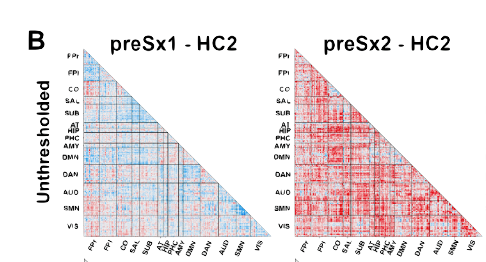
Defining trajectories of neuroimaging biomarkers in MAPT mutation carriers
This aim of this project is to study the clinical, genetic, and neuroanatomical characteristics of patients carrying p.A152T, a genetic variant in the tau gene that confers risk for both Alzheimer’s disease and FTD. We will also use both structural and functional imaging to assess deficits in MAPT mutation carriers.
Funding: The Tau Consortium
Research Collaborations

Frontotemporal Dementia: Genes, Images and Emotions
This study at UCSF aims to better understand the clinical, genetic, imaging, emotional and diagnostic features of frontotemporal dementia. This study collects longitudinal clinical, imaging, behavioral and autopsy data to improve clinical care for patients with FTD.

ARTFL LEFFTDS Longitudinal Frontotemporal Lobar Degeneration
The ALLFTD study is a multi-site, longitudinal investigation designed to advance our understanding of the clinical, genetic, neuroimaging, behavioral, and diagnostic features of frontotemporal dementia. By integrating detailed clinical assessments with imaging, behavioral, and genetic data, the study seeks to identify early markers of disease, track progression over time, and ultimately improve diagnosis, treatment, and clinical care for individuals and families affected by FTD.
Diagnose CTE
The Diagnose CTE Research Project-II is a multi-site research project focused on advancing scientific breakthroughs in detecting chronic traumatic encephalopathy (CTE) during life. Its mission is to develop reliable diagnostic tools while exploring factors that influence who develops CTE and why.